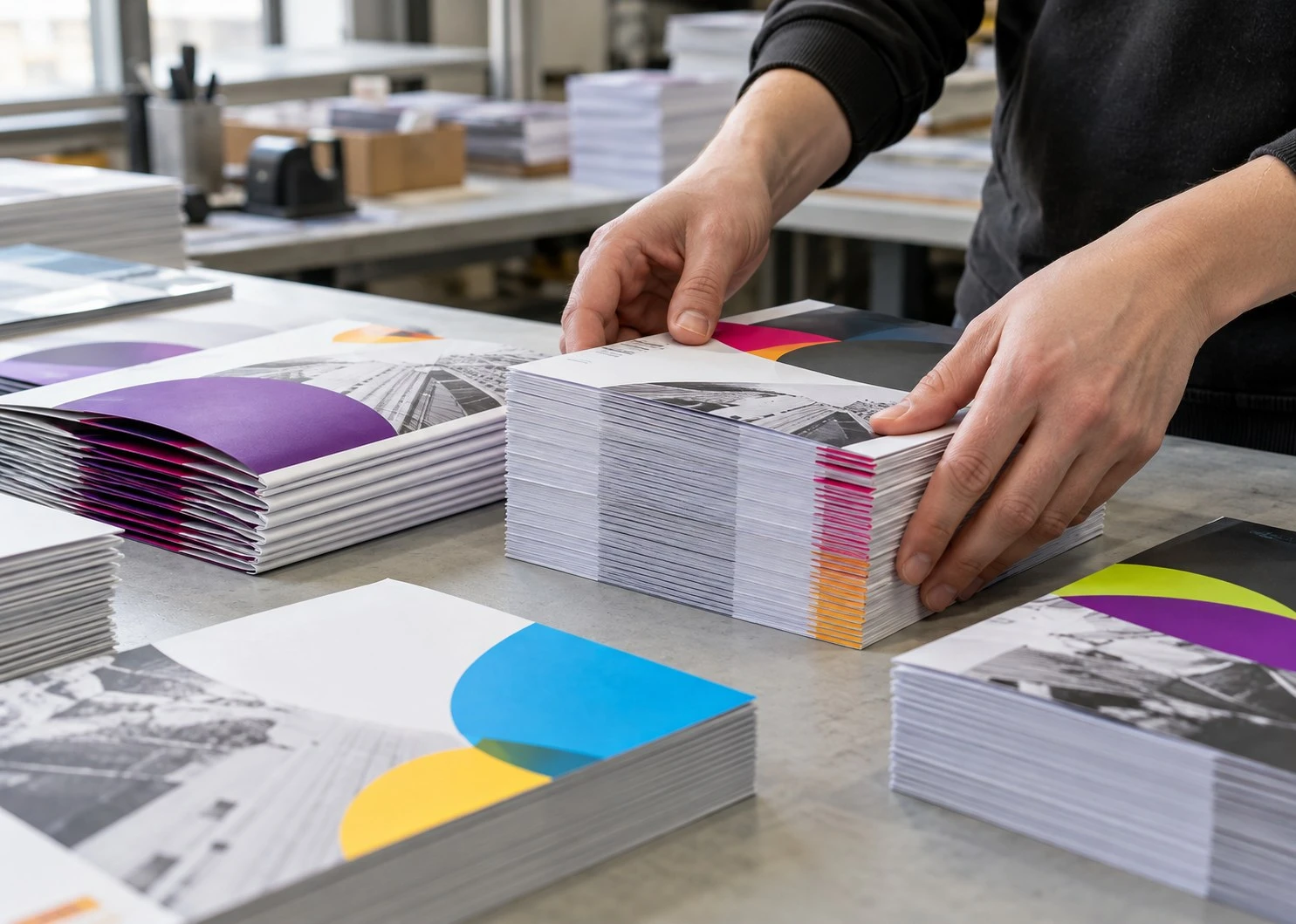
 Print Variations
Faced with the need to print business cards, brochures or leaflets, and contacting one (or several printing houses at once), The customer is often faced with the problem of choice. After all, some promise to do it quickly, but ask for more, while others, on the contrary, are ready to give in on pricing, but demand to wait with the implementation. And sometimes it happens that even the same artist offers a choice of two alternatives - "faster"or "cheaper". And the reason for this diversity is not at all the desire of the “printer” to make money on the haste of his clients. It lies in the features of printing a particular product.
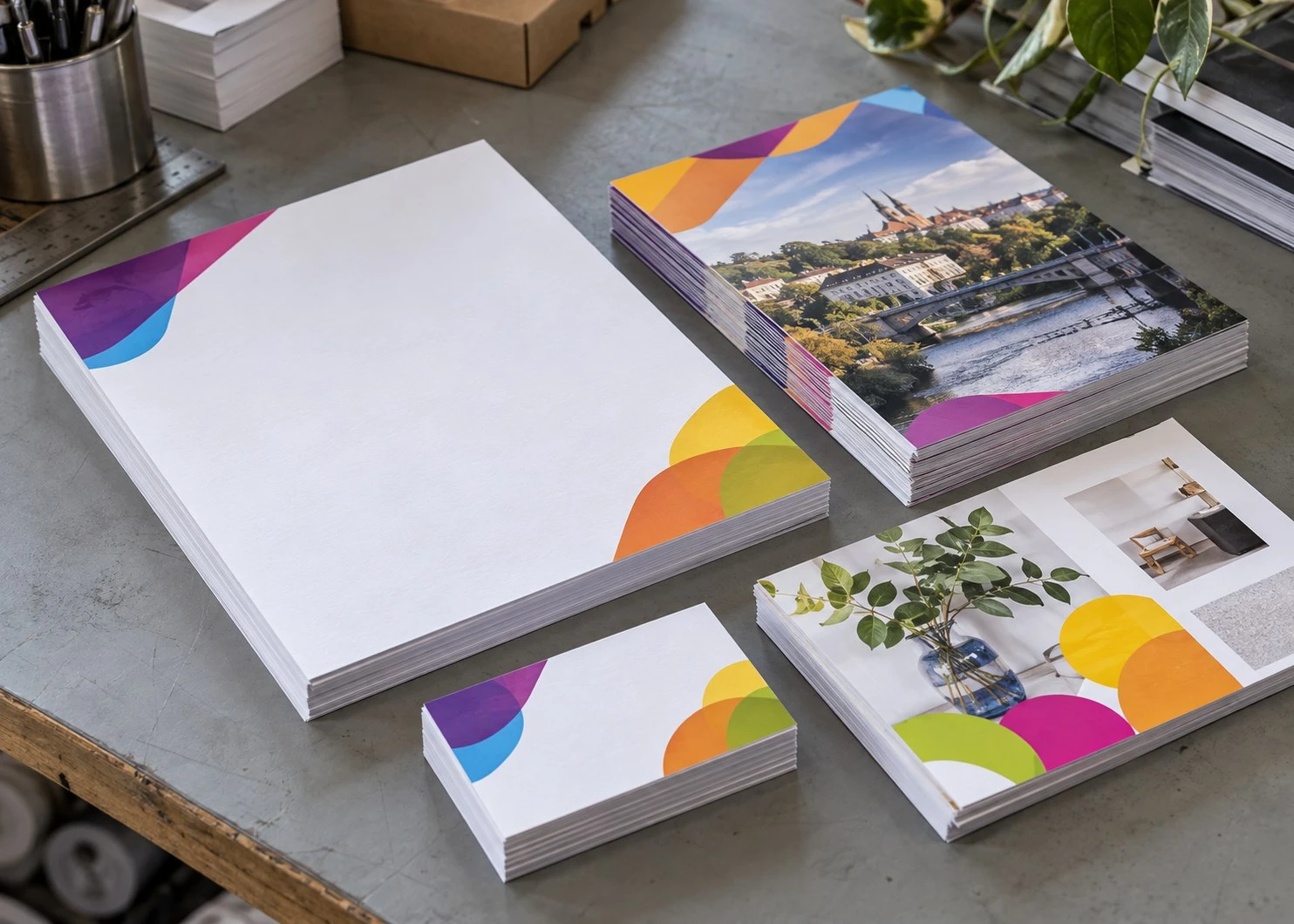
In the modern world, there are many variations of transferring to paper. But the most popular for commercial use are 2 options for printing promotional printing products - digital and offset.
Digital printing is the so-called "direct" transfer to cardboard by pouring ink. The technology is similar to using a "home" printer - sheet material is loaded into the device, and the output is a finished print. At the same time, the layout is transferred with ink or polymer powder (inkjet and laser).
The main feature of this system is its speed and stability. So, when stamping any publications from one file, the costs will be almost the same for each sheet. And 300 business cards, roughly speaking, will cost 3 times more than 100.
Other advantages of such a transfer include:
- Easy preparation . To output a file to layout, you do not need to perform any complex technical procedures.
- The possibility of piece "descents", which helps to print layouts from 1 pc. with a minimum step.
- Quick readiness. It will take from several minutes to several hours to complete the task. That is why such typography is also called "operational".
- More number of variations. Working with sheet consumables, printing machines allow you to transfer the layout to plastic (discounts, bank cards), aluminum (nameplates, plates) and other bases.
- Low cost of error. If a defect is detected during printing, the operator can stop the process and restart it with minimal loss of resources.
Based on this, we can summarize that the digital printing method is suitable primarily for single-piece production, as well as projects with a close "deadline".
Features of offset printing technology
Offset print is a technology for reprinting pictures that has a long history and its roots go back to the printing press. From the very moment of its invention, it has remained practically unchanged, and today it represents the same “rolling” machine with an offset shaft (hence the name). In such a device, the image is transferred to the media not by a print, but by an imprint of a special matrix applied to the rotational mechanism.
The peculiarity of the technology is that due to complex preparation (formation of clichés/forms, paper loading, cross adjustment), the production of quantities below 1000 copies is not economically justified. However, the price of such a transfer in the long run of many thousands of copies is much lower than with a simple printer. In addition, the printing machine has other advantages:
- High speed of manufacturing large-circulation products. With multimillion-dollar orders, this method is many times more productive than analogues.
- High stamping accuracy. Compared to analogues that “blur” the pattern into pixels, the rolled product makes a much better print with smooth edges of the elements. This allows you to stamp 5-6 keg text onto booklets or catalogs while maintaining its readability.
- Quality color rendering. Images obtained by press-pattern application more closely match the color gradation. This makes it possible to achieve full compliance with corporate colors (if their formulas are in Pantone, or CMYK).
- Stable result. Unlike print, where each image is formed anew, the rolling unit already has a ready-made template and simply duplicates it. Therefore, the result at the beginning and at the end of the tape will be almost identical.
However, with all this, this process has one significant drawback - the implementation time. Preparing equipment takes a lot of time, so most often printing houses launch prefabricated batches, accumulating several orders. In view of this, the term for the implementation of the project will be 3-10 days.
Which printing method is better?
A person who is not privy to all the intricacies of printing production always has a question - which printout is better. It is difficult to make an unambiguous decision, since both techniques have their own strengths and weaknesses. But if you need to make a decision in favor of one of the common printing principles, then you should proceed from the following criteria:
- Quantity. If, when replicating on a printer, the prime cost is calculated for each individual sheet, then in offset it is formed as the initial launch cost + expenses for paper and other materials + labor and other overheads. Therefore, for print runs above 1000 pieces, you definitely need to choose offset production. Moreover, the larger the batch, the cheaper each unit in it will become. When ordering more than 250 copies of the same type, it is also more expedient to abandon the printer version and solve the problem by purchasing large lots (1000-2500 pieces). After all, at average prices, 300 flyers in digital printing are equal in price to 1000 in offset assembly.
- Terms. A digital printing house most often completes orders within a day or even a few hours. At the same time, the standard term for "prefabricated slopes" is 2-5 days.
- Unification. If you need to print invitations, discounts, or other printing with a unique number on each product, then you should choose only modern digital printing solutions.
- Color correction. If there is no confidence in the quality, and there is an urgent need to check the result before launching the entire print run, you should give preference to digital.
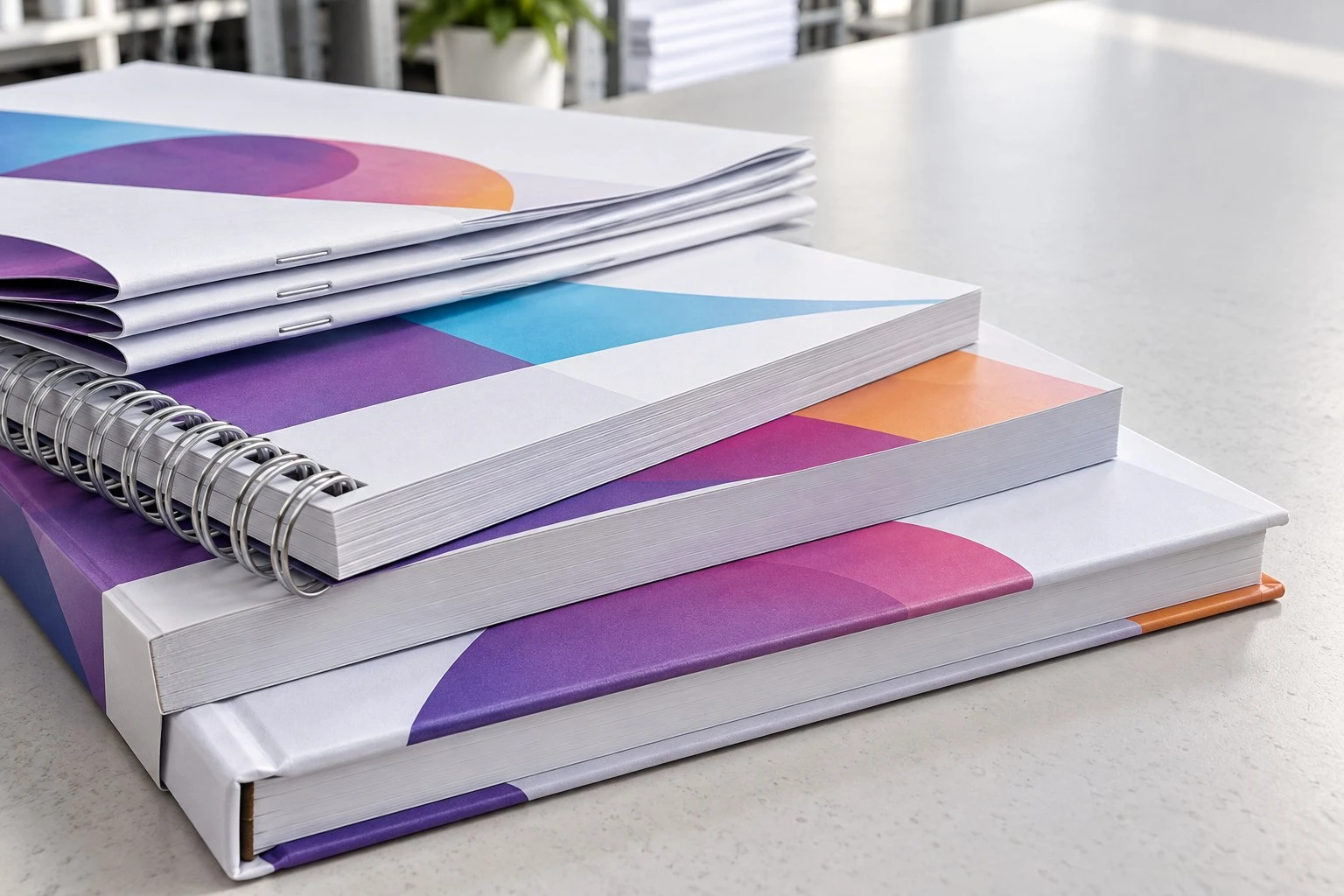
- Material. If you need stickers, plastic cards, plates, rolling machines will not work. At the same time, catalogs, giveaways, books and newspapers should be printed on offset printing units due to low cost and high detail.
The the time and budget, however, however. And almost always in thousandth runs it will be in favor of offset, and in case of single runs it will be in favor of numbers. But the final delivery conditions largely depend on individual conditions (for example, a personal discount). The final cost will also be affected by the fill density, the number of printed sides, the color and density of the cardboard.
Our printing house provides both digital printing and offset printing services. Working with us, you will always save your time and money.
If you were interested in our article, repost it on the social network, maybe it will be useful to someone else. And if you have any questions, you can always contact our specialists, they will always be happy to advise you on issues of interest in the field of printing products.