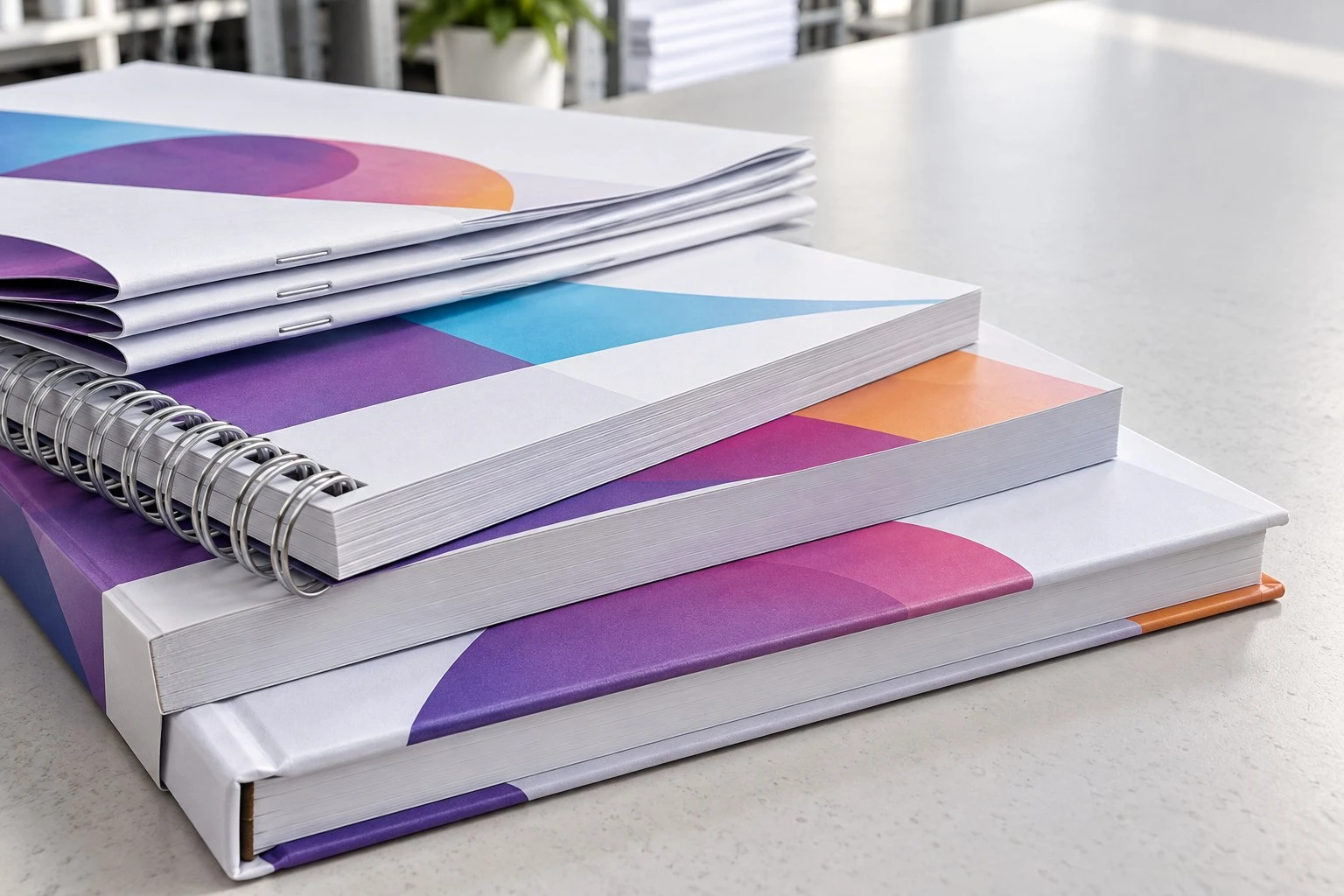
 In the production of advertising and other printing, a large what matters are the visual styles and the additional elements chosen for them. In order for the finished product to turn out to be of high quality and beautiful, you need to choose a suitable mount. This applies to multi-page products designed not only to promote goods or services, but also to inform about the company's assortment, to reveal its characteristics.
Printing, consisting of several pages, includes options designed to inform consumers. These are various brochures, catalogs containing a lot of information on the organization's products. They should be not only beautiful, eye-catching, but also of high quality. This applies, for example, to the choice of fastening method.
What are the options for fastening printed publications
Many types of binding and methods of fastening notebooks in a block, its weaving are used. Each technique has its own advantages, which must be considered before choosing. There are some nuances, some can be called disadvantages. In general, the following are most common:
- sewing with wire;
- adhesive seamless fastening or binding of the same type;
- mechanically connecting the cover to the block;
- lid.
When wire sewing, several sheets are combined with each other using special staples. This process is called "stitching" because it does not use finished fasteners. A wire is used to form a stitch:
- first a piece of it is cut off;
- the workpiece is threaded through the paper, applying force;
- this is how the legs of the staple are formed to combine the notebook ;
- the finished block, in turn, is fastened to the cover.
The shape is selected depending on the thickness of the sheet and the number of pages. The thicker the finished printing is, the larger, longer the legs should be. Short ones are applicable only for small volumes of thin material.
Wire sewing is carried out in a stitch or stitch. The first method involves fastening along the spine from the outside to the central turn. This is the most common method in advertising printing. It is especially often used for catalogs and brochures, magazines, brochures, and various reference books. A fast, inexpensive and reliable technique.
Tuck-in is used less often, due to two significant drawbacks. The first is that the stitch becomes visible from the front side. The second is that the publication is poorly disclosed after processing. But this option is well combined with other binding and brochure technologies. For example, when releasing a magazine or catalog for pages, you can use a stitch, and then using a seamless method, elastically glue the cover and wait for it to dry. Thanks to such a combination, it turns out to extend the life of the product, make it durable, increase the duration of use.
Now it’s worth talking about the second type - seamless fastening and binding using adhesive material. The first is used for joining one edge of the spine of the sheets and the cover. This is the most common way when you need to resort to glue treatment. Here it is supposed to improve the adhesion of all elements, by applying strips of material to the first and last sheets directly near the spine and along it.
The third technique is mechanical. It is based on a combination of several technologies :
- comb-shaped staples;
- fastening with rings of various shapes and sizes;
- use of spiral spines;
- plastic rings;
- Velo style binding.
All styles have one thing in common . It lies in the fact that you must first make holes. And then a device is threaded through them, and it doesn’t matter what material it is made of, plastic or metal. This option is used in the production of catalogs, notebooks or image publications like flip calendars.