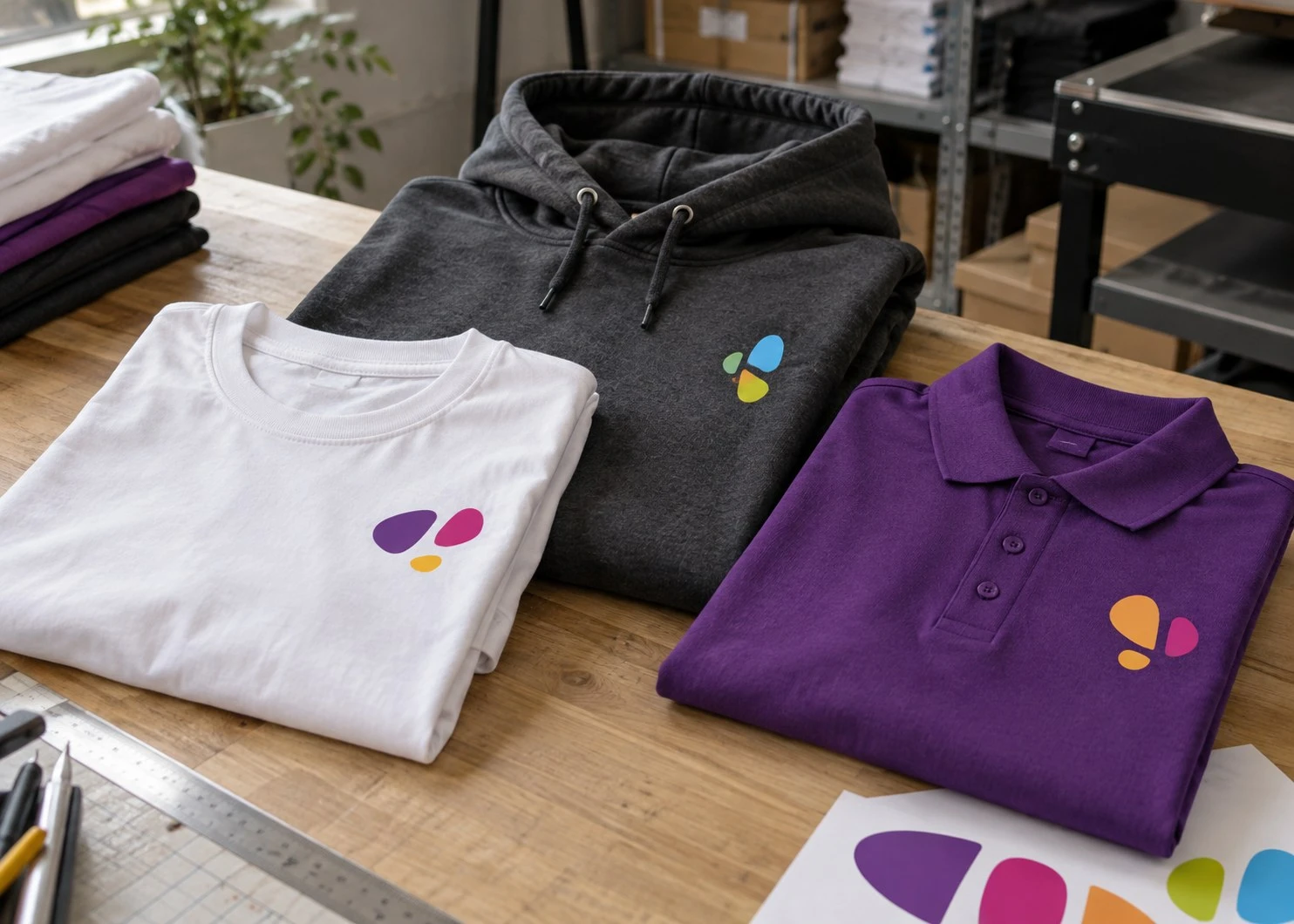
 Making Printed T-shirts
Clothing branding is one of the most important and effective elements of corporate style in the fight to increase brand loyalty. But the stylization of branded items is far from the only scope of its application. After all, it is no less in demand among ordinary consumers, as it allows you to create unique things, form your own wardrobe and stand out.
Thanks to the constant development of technology, today the service of imprinting pictures on T-shirts is really available not only for large customers, but also for everyone. After all, the price of branding often does not exceed the cost of the thing itself. And with large print runs and sufficient time, the release of personalized clothing is cheaper than buying sleeveless jackets with ready-made styling.
Most often, special methods are used to transfer photos and text to any fabric product printing, most of which were invented with the advent of dye polymerization.
Today, the following solutions are available to the consumer:
direct application (digital printing on T-shirts);
using intermediate media (sublimation);
thermoapplication (Flock and Flex films);
silk screen printing.
Each of these principles has its own advantages and disadvantages, and is applicable to a certain type of material. Therefore, before making a choice, it is advisable to deal with all the features of this issue.
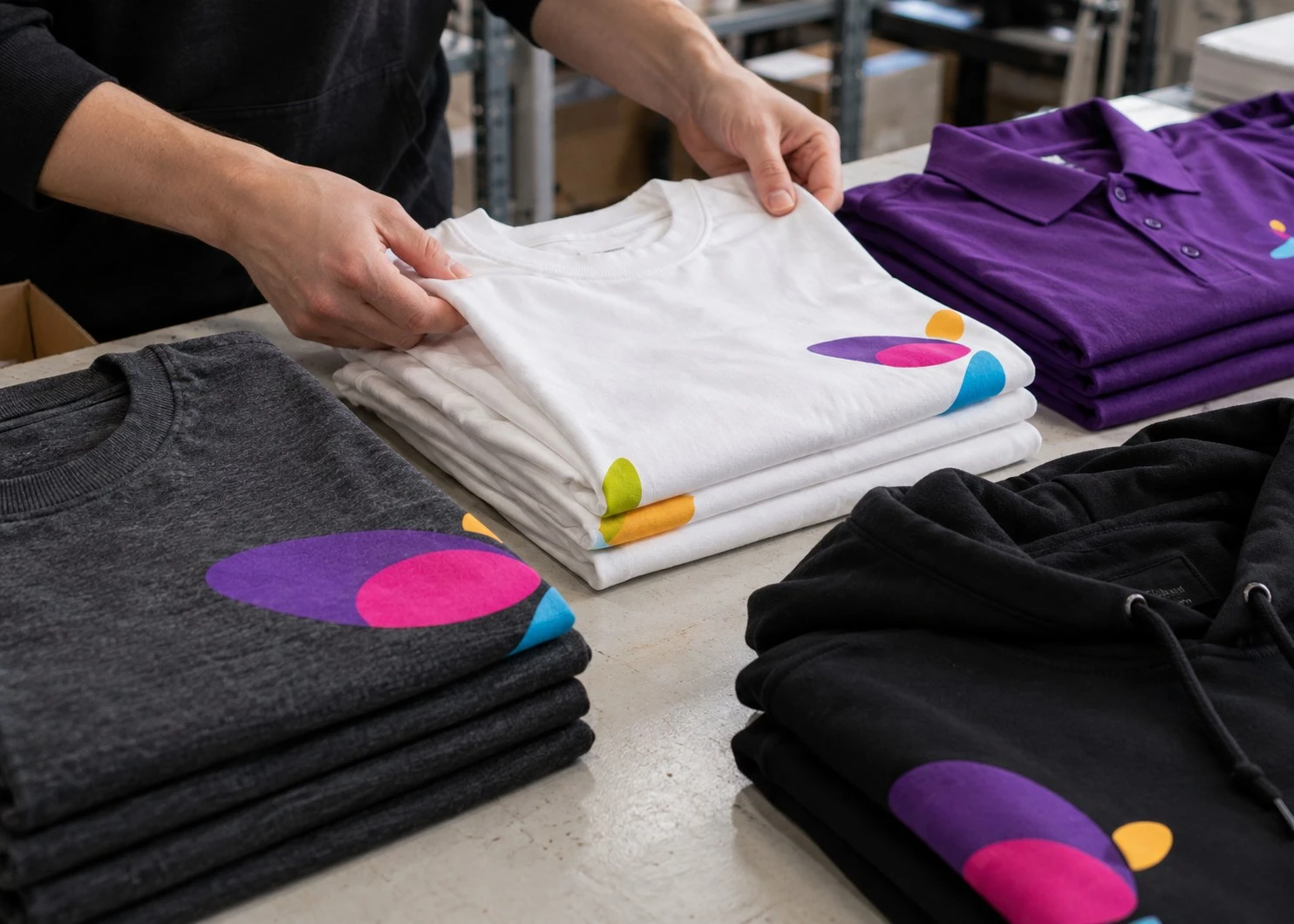 Direct transfer to T-shirt
The most modern and easiest way. The procedure is almost entirely similar to printing on paper. First, the T-shirt is placed in a specialized flatbed machine, which spills it with paints. And then the product is sent to the drying chamber, where the complete polymerization of the dye and its fixation on the plane is achieved.
The advantages of the process include:
- The quality of the drawing. The print, transferred by direct print, easily "withstands" up to 50 washes (subject to technology) and is practically not amenable to fading under the influence of ultraviolet radiation. It is not subject to mechanical abrasion and does not deform the work surface.
- Large size. The dimensions of the print are only limited by the dimensions of the printing press.
- Uniformity. Dyes are deeply absorbed into the fibers, creating an imperceptible tactile layer of drawing. In view of this, the print does not bulge or peel off, does not “scratch” and does not glue the surface into a uniform “cake”.
- Color. Printer ink mixers produce the entire palette from red to green, removing restrictions on the color layout.
- The ability to print on cotton fabrics of different thicknesses and densities.
Due to the presence of White (White) inks, it became possible to print on dark materials. To obtain a color image on dark fabrics, a special primer is applied, which increases adhesion, then the image is printed with white ink in the first pass, and CMUK (all other colors) is applied to the white base. As a result, you get a bright and colorful print on black / dark t-shirts. But at the same time, the price of printing on a white T-shirt is almost twice cheaper than printing on dark fabrics.
However, with all the advantages, this transfer option also has one significant drawback - stamping speed. Even the most productive machines cannot provide mass production or release on a commercial scale. Therefore, you often have to wait several days for your order. In addition, the image will have to be processed and prepared for printing before launch, which makes piece runs unprofitable for the printer.
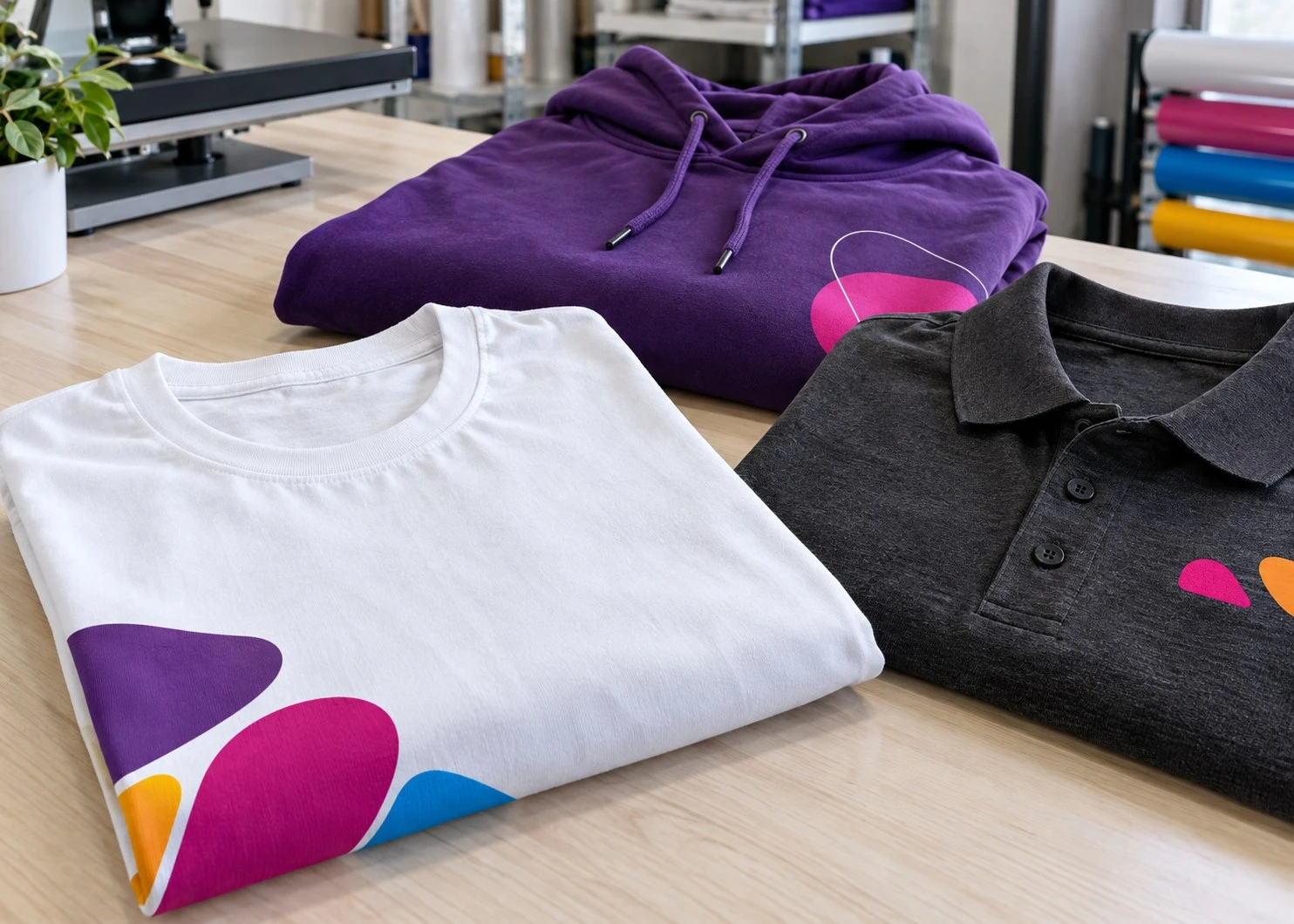 Interlayer (transfer sublimation)
The method was developed for synthetic substrates, and was created for the projection of images in the "American spirit" (bulging, rough pictures) . It uses a layer of polymer material on which the image is printed. After that, the layer is applied to the synthetic fabric using a heat press, fusing it and forming a new layer. To the touch, such prints are convex and rough elements.
Since we use special two-layer T-shirts, our customers do not feel discomfort when synthetics come into contact with the body, because the inner layer is made of 100% cotton, which makes contact with the T-shirt pleasant and comfortable.
The advantages of the process include:
- The quality of the drawing. The print is saturated and bright.
- Efficiency of production, minimum order from 1 piece.
- Resistance to washing off at least 20 washes.
- Minimum price
The disadvantages of sublimation on T-shirts include:
- Printing is possible only on white T-shirts.
- The outer layer must be synthetic.
Thermal application. Flex and Flock films
The fastest and relatively simple alternative (hence the relatively low cost). The pattern is formed using Flex and Flock vinyl films, which are cut and formed by a cutting plotter.
The positive aspects of the method include:
- high processing speed;
- saturation and fullness of colors of films;
- resistance to wear. the manufacturer declares more than 50 washes;
- low cost compared to direct printing;
- the ability to use light-accumulative or reflective films.
- the ability to print on any fabric (synthetics, cotton and etc.)
- Limited number of film colors (white, black, blue, yellow, red, green)
- The layout must be in vector form, which affects the cost of prepress
Based on the above pluses and minuses, we can conclude that if your print is one or two-color and these colors are available, then this method is the most optimal in terms of price / quality.
However, the products obtained in this way require certain handling and proper care. In addition, for some types of fabrics, thermal transfer is not possible, due to their deformation under the influence of high temperatures. Films are transferred to the material at a temperature of 180 degrees C.
Silkscreen
Silkscreen and logo embroidery on T-shirts
One of the oldest ways of forming images on a fabric. In order to make a stamp, use a press plate and stencils (templates) + paints. Moreover, staining is performed manually, from where the possibility of error, rejection and a relatively high price “floats”.
Silkography is limited in color, and most often makes it possible to include up to 6 components in one figure. Moreover, the more flowers, the higher the budget of the project. Such a methodology also requires lengthy technical training. But at the same time, the price of production, the quality of work and a large selection of materials often lead to an advantage in favor of this method.
Often, manufacturers of the "old school" tend to convince the client to the last of the advantages of this technique and its prospects. However, such a conviction rarely has a real background. Indeed, with each passing day, printer technologies are confidently replacing silk-screen printing.
* Smaller print runs are not economically viable due to the technological features of this type of printing on T-shirts.
What kind of printing on T-shirts to choose?
Has difficulty making decisions. As a result, one has to be guided only by the recommendations of printers and often give up one's own wishes. But having studied the features of each type of application, you can prepare a project with high quality and achieve 100% implementation of the plan.
So, in order to create branded attributes or elements of a personal wardrobe, first of all, you need to decide on the criteria for this product:
- Service life. If multiple dressing is meant, if the image consists of individual colors, then a film application with heat shrink will be optimal. However, to implement the plan, you need a vector logo layout. Favorable price and fast implementation will help save money. For promotions and thematic gatherings, sublimation on a two-layer white T-shirt is suitable. If, on the contrary, durability and durability are in favor, then printers with direct printing on T-shirts should be preferred.
- Circulation size and production time. For small urgent batches, sublimation and thermal application are suitable. For large batches and orders that take time, you should choose a printer, thermal application or silk screen.
- Type of fabric. If a good natural canvas is used, then the print is exactly what you need, or thermal transfer with Flock or Flex films. If the sleeveless jacket is sewn from polymer woven or knitted cuts, then it is worth dwelling at transfer sublimation.
However, the conditions for the implementation of each individual project can be selected individually, taking into account personal discounts, bonuses, and the workload of production capacities of one type or another. Therefore, before choosing, you should contact the printing house that provides the relevant services and ask for details.
You can always refer to our specialists, they will always be happy to advise you on your questions in the field of souvenir production.