 What is digital printing?
With the development of electronics, many analog devices had to give way to their Digital counterparts. Printing presses did not stand aside, which confidently replaced a new type of paper media printing - "digit". However, it did not become a full-fledged replacement for the outdated method due to its specifics.
Today, there are a huge number of varieties of printing systems, and the generalized concept of “digit” refers to both printing and large-format printing of soft and flexible bases. But, regardless of the technical parameters and dimensions, all devices in this category have one common quality - a direct output. And intermediate preparation - the compilation of press clichés, templates or "trowels" is absent as such.
The simplest digital printing option that you can imagine is an inkjet-type home or office printer. All other industrial and semi-industrial units use other dyes and drives, but generally have a similar principle of operation.
The features of this technology for the production of advertising and information products include:
- High speed. Current settings are capable of processing up to 100 pages per minute.
- Easy imposition. Preparation of the original image does not require additional manipulations – the layout is displayed in the form that is on the computer screen.
- Economy. You can start manufacturing from 1 piece with minimal losses by adjusting the widths of cardboard and paper.
But with all this, this type of transfer of electronic information to a physical medium also has disadvantages - the image is not stable on the folds, the lack of a stable result in the "head" and "tail" of the party, errors in color reproduction.
How does Digital Printing work?
If the direct output of the printing industry is based on the principle of using a grid and controlled drives. So, in the most common version of equipment with jet pouring, the principle of sequence is used. Moving from side to side, the print head spills line after line of ink. And the broaching mechanism moves the sheet along the coordinate axis.
On the other hand, to form an image, 4 variations of inks are used, which are combined into a color scheme according to the formula CMUK (cyan, magenta, yellow, black). By mixing them, millions of shades are created. Moreover, paints are already mixed on the sheet - the red dot lies next to the yellow one, forming pink, etc. The percentage of one color to another is determined by the internal controller, which automatically lays out the layout on the color scheme.
Most of the process of such a print occurs without the user control. All that is required from the operator is:
- File preparation. All original layouts for output are laid out manually to the desired width.
- Loading. Most often, these printers use roll media - banner, film, paper. They need to be loaded into the machine and clamped.
- Progress control. Alas, even with the most modern equipment, failures and errors cannot be ruled out. Therefore, the operator controls the entire process.
When poured, solvent-type liquid dyes. They penetrate deep into the surface, creating a moisture-resistant print. However, the quality of fixation largely depends on the comparability of the ink, temperature, drying, maintaining the proportions of ink mixing. Therefore, in addition to the main equipment, the stamping process involves:
- hoods to remove pungent odors;
- drying, to ensure high-quality drying conditions for paints;
- cutting machines for dividing a common strip into separate fragments.
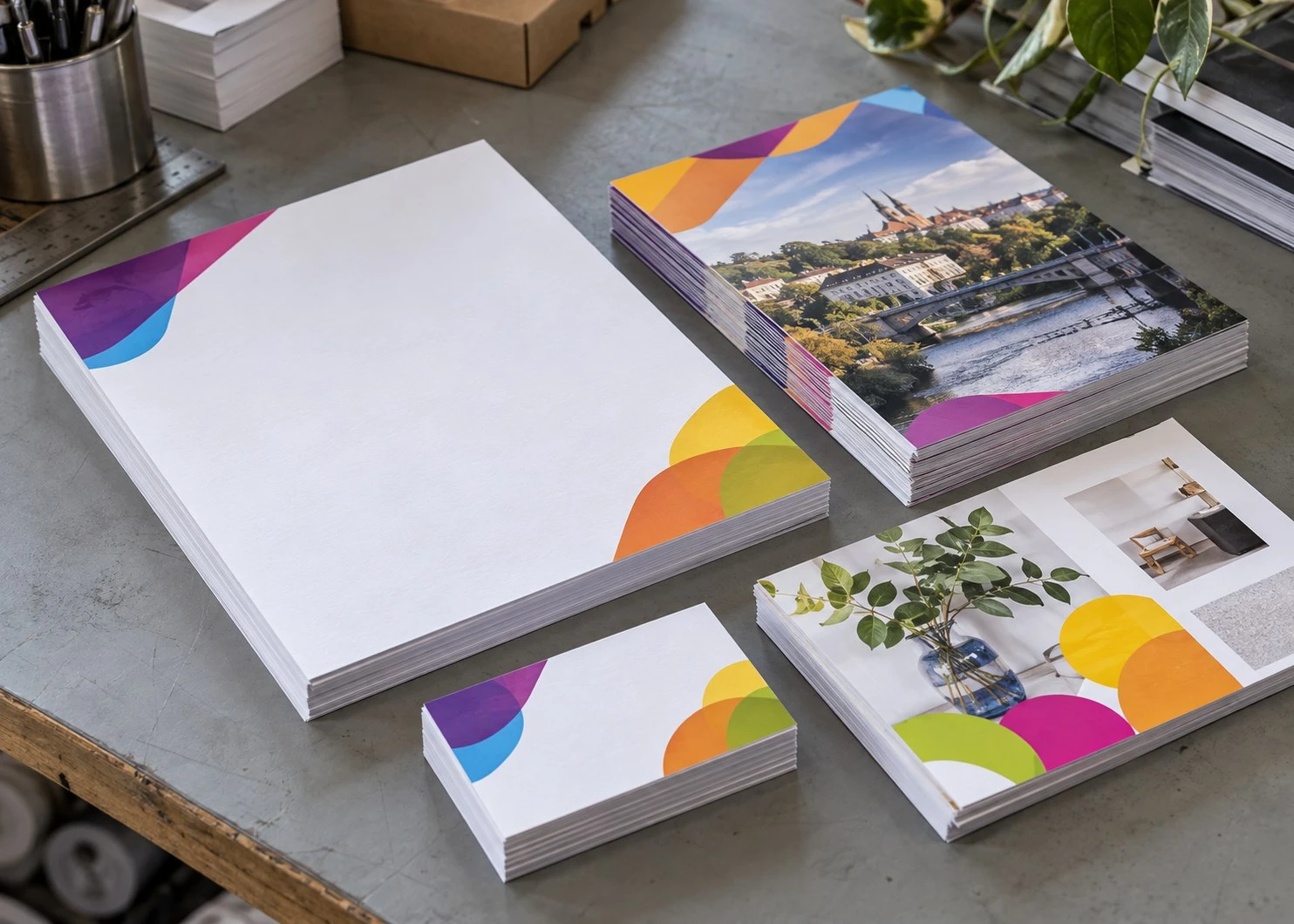
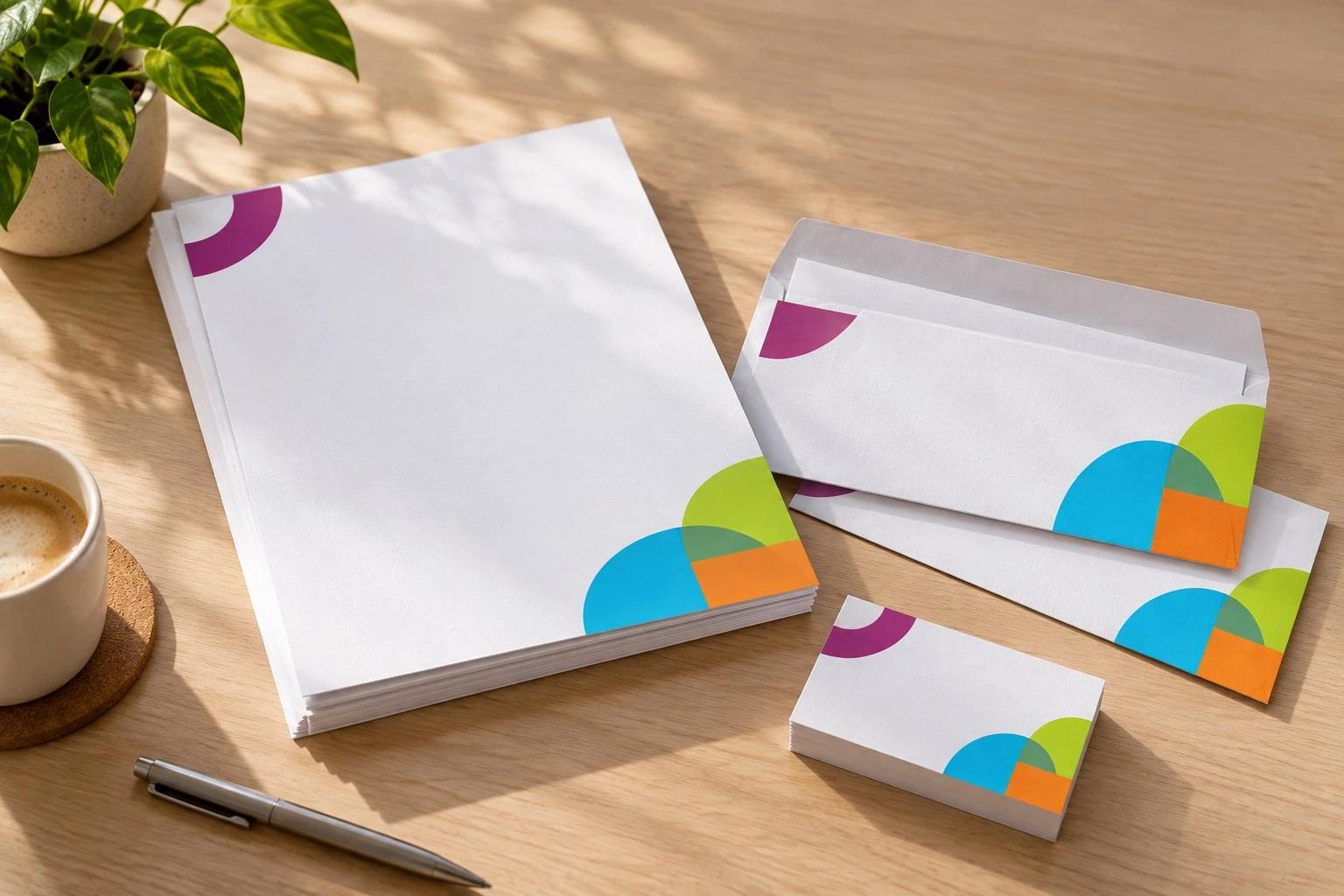
However, industrial production does not always have sufficient volumes for the use of rolls of cellulose or polymer origin. Therefore, in the workshops of specialized companies, you can most often also find flatbed units - devices that are designed for processing sheet materials of relatively small dimensions. Their size can be from European standard A6, up to a double sheet A0. But the most common option is A3 +. The use of equipment of this size is most justified from an economic point of view for business cards production, flyers, leaflets.
The system of flatbed technology can also be fundamentally different from the inkjet fill. For example, some modern units use laser color transfer. In such machines, the image is formed by a polymer powder (toner) magnetized with static voltage and fired in a thermal module.
Digital printing
replaces it entirely. The reason is the high cost of consumables, and as a result, finished products. In view of this, its use is beneficial in small and medium runs, but loses its attractiveness in large batches. For example, a set of 300 paper "handouts" of any kind will have a batch price of 1000 copies made in offset.Therefore, this is the most common way to print:
- photos;
- ads;
- decorative elements;
- label, price tags, packaging.
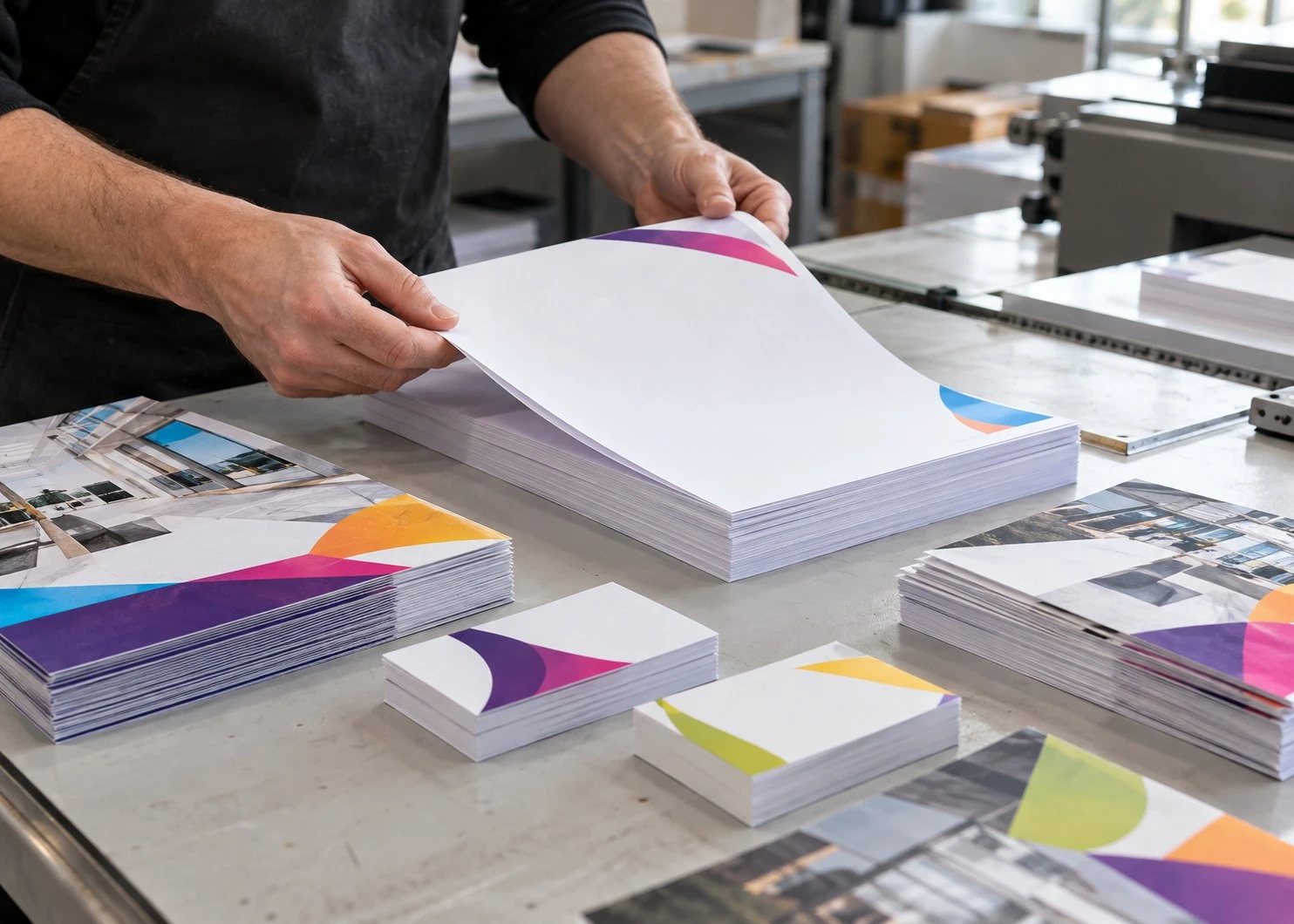
However, the production of operational materials is also beneficial. For example, presentation tools can be made in just a couple of hours, and set of business cards for one-time distribution - for half an hour.
The only industry in which this technology dominates all others is the processing of hard materials - plastics (bank cards, discounts, tags), aluminum (nameplates, emblems, souvenirs). After all, no other method can provide the same speed, price and quality.